July Garden Tips for
Hot Gardens and Gardeners
Garden chores for July; look for nutrient deficiencies in ornamentals and palms, correct with chealated micro-elements and slow-release fertilizers, replace plantings damaged by drought, keep on top of weed removal, plant blanket flower, verbena and moss rose for color, plant trees and palms, look for ripe avocados, figs, mangos and bananas.
A rain gauge is the most important landscape management tool in your arsenal. Mount it on a fence or deck where the rain falls freely. Check, record the amount collected and empty daily. Turn the irrigation system on only when your records indicate or the grass shows signs of needing water.
Still looking to plant? Heat tolerant veggies include cassava, yard-long beans, and okra; flowers that hold up to the heat – pentas, porterweed, caladiums and blanketflower.
Take a good at look at your trees and shrubs, if there is any deadwood, remove it anytime. However, now is good to prevent it from blowing around in afternoon thunderstorms or more serious windstorms yet to come.
Take care of yourself, you are important. Wear a hat while gardening.
If your lawn is looking a little peaked, it may not be necessary to use a complete fertilizer containing N-P-K if such has been regularly used. July is a great time to apply a minor element product containing iron, manganese, magnesium, zinc and others.
Do you still have impatiens planted in the Florida landscape? They are not wilting due to lack of water, but from the heat. Remove them and try some flowers that like it hot.
Check container gardens often during the heat; they may need irrigation as often as twice a day to compensate for rapid loss, plant use water to help cool their systems.
“Plant carrots in January and you'll never have to eat carrots” said an unknown author, it is obvious he or she is not from South Florida; however the sentiment is good, plant when the time is right. If you are new to veggie gardening here, the planting seasons are different, plant carrots in January, not July.
If you have a Bahiagrass lawn, now is the time to re-seed bare or thin areas. Choose the variety ‘Argentine,’ it is the best for lawns, use scarified seed (which is seed that has the hard seed coat broken or thinned making the seed ready to grow) and keep the seed moist until it germinates.
Look for figs; they are ripe this time of year. Eat them right off the tree or collect for preserves which were Granny Cloud’s favorite. There is nothing like fresh fig preserves on homemade biscuits for Sunday Brunch.
The afternoon heat is brutal, so enjoy the garden in print. A hammock in the shade or a favorite recliner inside with the AC on is a great way to while away the hottest hours with a book. Try a factual tome about gardening such as the Florida Gardener’s Guide by Georgia Tasker and Tom MacCubbin or delve into fiction with Nora Roberts’ In the Garden trilogy of Blue Dahlia, Black Rose and Red Lily.
New books gardeners might enjoy include A Philosophy of Gardens by David E. Cooper, Coleus: Rainbow Foliage for Containers and Gardens by Ray Rogers, The Tiny Garden by Jane Hunter, Florida Gardening: The Newcomer's Survival Manual, Second Edition by Monica Moran Brandies or The Landscape Diaries: Garden of Obsession by Gayatri Carole Rocherolle and Richard Felber.
St Augustine grass and chinch bugs, this bears repeating, be vigilant in scouting for this pest, there has been an outbreak of infestations during the hot weather. Look for chinch bugs in “hot spots” near the driveway, patios, walkways and areas where irrigation doesn’t cover well.
Leave grass clippings on the lawn, most of the time. The rule of thumb is never remove more that 1/3 of the top growth, clipping of this size will break down releasing nutrients back into the soil. However, if the clippings look like hay, remove them to the compost pile.
Veggie gardeners, now is the last time to solarize your plot with clear plastic before the fall garden season. Prepare the garden as if ready to plant, make sure the soil is moist and cover with a thick sheet of clear plastic. Leave in place for 6 – 8 weeks, the accumulated heat will kill weeds, insects, fungi and nematodes.
Dawn or dusk are the best times to work outside and when mosquitoes are most active. Wear light-colored clothes – mosquitoes are attracted to dark colors and a good repellent. Thoroughly inspect your spaces and dump out any standing water where mosquitoes lay their eggs.
Veggie gardeners, now is the time to pull out garden catalogues saved from the spring mailings, plan and order for the fall garden. Make a paper plan; include how much area is to be planted for each variety, planting dates and variety names. Be sure to select varieties suited for Florida’s climate; these grow best and are the most productive.
“From the first dawn of life, all organic beings are found to resemble each other in descending degrees, so that they can be classed in groups under groups. This classification is evidently not arbitrary like the grouping of stars in constellations." - Charles Darwin
A rain gauge is the most important landscape management tool in your arsenal. Mount it on a fence or deck where the rain falls freely. Check, record the amount collected and empty daily. Turn the irrigation system on only when your records indicate or the grass shows signs of needing water.
Still looking to plant? Heat tolerant veggies include cassava, yard-long beans, and okra; flowers that hold up to the heat – pentas, porterweed, caladiums and blanketflower.
Take a good at look at your trees and shrubs, if there is any deadwood, remove it anytime. However, now is good to prevent it from blowing around in afternoon thunderstorms or more serious windstorms yet to come.
Take care of yourself, you are important. Wear a hat while gardening.
If your lawn is looking a little peaked, it may not be necessary to use a complete fertilizer containing N-P-K if such has been regularly used. July is a great time to apply a minor element product containing iron, manganese, magnesium, zinc and others.
Do you still have impatiens planted in the Florida landscape? They are not wilting due to lack of water, but from the heat. Remove them and try some flowers that like it hot.
Check container gardens often during the heat; they may need irrigation as often as twice a day to compensate for rapid loss, plant use water to help cool their systems.
“Plant carrots in January and you'll never have to eat carrots” said an unknown author, it is obvious he or she is not from South Florida; however the sentiment is good, plant when the time is right. If you are new to veggie gardening here, the planting seasons are different, plant carrots in January, not July.
If you have a Bahiagrass lawn, now is the time to re-seed bare or thin areas. Choose the variety ‘Argentine,’ it is the best for lawns, use scarified seed (which is seed that has the hard seed coat broken or thinned making the seed ready to grow) and keep the seed moist until it germinates.
Look for figs; they are ripe this time of year. Eat them right off the tree or collect for preserves which were Granny Cloud’s favorite. There is nothing like fresh fig preserves on homemade biscuits for Sunday Brunch.
The afternoon heat is brutal, so enjoy the garden in print. A hammock in the shade or a favorite recliner inside with the AC on is a great way to while away the hottest hours with a book. Try a factual tome about gardening such as the Florida Gardener’s Guide by Georgia Tasker and Tom MacCubbin or delve into fiction with Nora Roberts’ In the Garden trilogy of Blue Dahlia, Black Rose and Red Lily.
New books gardeners might enjoy include A Philosophy of Gardens by David E. Cooper, Coleus: Rainbow Foliage for Containers and Gardens by Ray Rogers, The Tiny Garden by Jane Hunter, Florida Gardening: The Newcomer's Survival Manual, Second Edition by Monica Moran Brandies or The Landscape Diaries: Garden of Obsession by Gayatri Carole Rocherolle and Richard Felber.
St Augustine grass and chinch bugs, this bears repeating, be vigilant in scouting for this pest, there has been an outbreak of infestations during the hot weather. Look for chinch bugs in “hot spots” near the driveway, patios, walkways and areas where irrigation doesn’t cover well.
Leave grass clippings on the lawn, most of the time. The rule of thumb is never remove more that 1/3 of the top growth, clipping of this size will break down releasing nutrients back into the soil. However, if the clippings look like hay, remove them to the compost pile.
Veggie gardeners, now is the last time to solarize your plot with clear plastic before the fall garden season. Prepare the garden as if ready to plant, make sure the soil is moist and cover with a thick sheet of clear plastic. Leave in place for 6 – 8 weeks, the accumulated heat will kill weeds, insects, fungi and nematodes.
Dawn or dusk are the best times to work outside and when mosquitoes are most active. Wear light-colored clothes – mosquitoes are attracted to dark colors and a good repellent. Thoroughly inspect your spaces and dump out any standing water where mosquitoes lay their eggs.
Veggie gardeners, now is the time to pull out garden catalogues saved from the spring mailings, plan and order for the fall garden. Make a paper plan; include how much area is to be planted for each variety, planting dates and variety names. Be sure to select varieties suited for Florida’s climate; these grow best and are the most productive.
“From the first dawn of life, all organic beings are found to resemble each other in descending degrees, so that they can be classed in groups under groups. This classification is evidently not arbitrary like the grouping of stars in constellations." - Charles Darwin
June Garden Tips for
Hot Gardens and Gardeners
Thinking about a chain saw for a gift to Dad on his day? Consider a guide for safe use too. The Centers for Disease Control and Prevention estimates there are 36,000 people each year treated in hospital emergency rooms for injuries from using chain saws. Whether trying to clean up after a minor or major storm, make sure Dad has all he needs to operate his new chain saw safely. A good place to start for safety info is the CDC fact sheet Preventing Chain Saw Injuries During Tree Removal After a Disaster available at http://www.bt.cdc.gov/disasters/chainsaws.asp
Great gifts for gardening Dads include personal weather stations, recording rain gauges, a high-tech insulated water bottle or wide brim sun-blocking hat. For dads who use power equipment put together a gift basket that includes safety glasses, ear protectors, gloves, chaps (for use with chain saws and power pruners) and two pair of shoes – a water resistant clog for puttering around and a pair of safety boots for use with power tools.
Another great gift for dad is a set of photographs of his landscape before the storm hits. Take shots of the landscape from all angles. Individual pictures of high value trees are also a good idea. Put the images in a book and include a disk or flash drive with digital copies. Make sure all plants are indentified by scientific name if possible and common name. Include directional info suchas north from the corner of the house, an overall image of the front and a close up of the address. After major storm events, even long term residents get lost when the landscape is devastated.
Plants under stress “know” it; of course there is no conscious brain function, but if decline and death are eminent, many plants flower. It is thought the expenditure of the last of a wounded plant’s energy to produce fruit/seeds or offspring is to insure the survival of the species. If a plant suddenly produces a massive crop of flowers, check carefully for stress or damage.
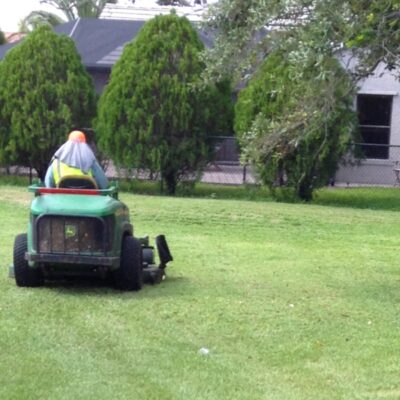
Weeds can be spread from one yard to the next by landscape maintenance equipment. Be sure to clean your mower with an air compressor or a quick blast from a high-pressure water stream before and after your neighbor borrows it; make sure the lawn folks do the same coming and going from each property.
It has been traditional to place houseplants outside for a breath of fresh air and some sun. However, interior plants that are acclimatized to the low light levels found in most homes can easily sunburn in subtropical and tropical regions with intense summer light and heat, a quick washing of the leaves and repotting in a shady area is all most houseplants need or can stand.
Keep and eye on St Augustine lawns for infestations of chinch bugs, they prefer hot dry weather, worms or caterpillars could also be feeding in the lawn at this time. Also, scout ixora and hibiscus for scale and mealy bugs and Rover and Fluffy for fleas and ticks.
“The way a child discovers the world constantly replicates the way science began. You start to notice what's around you, and you get very curious about how things work. How things interrelate. It's as simple as seeing a bug that intrigues you. You want to know where it goes at night; who its friends are; what it eats.” -- David Cronenberg
Sometimes the best barriers are fences are walls, not hedges. If the area available for planting a screen or hedge is narrow, choose a fence instead. Vines add a nice green covering, but can cause failure of some fence types, most notably chain-link construction, in hurricanes. Instead, misdirect the eye from the fence with groupings of shrubs or a small tree planted a few feet away from the fence.
Fall and winter are the main seasons for veggies in subtropical and tropical areas, hoever, there are species that tolerate summer conditions. No summer veggies in your garden? There’s plenty of time to plant a cover crop, turn it under and reap the benefits before time to plant the major fall garden. Cover crops can reduce pests, increase fertility and add organic matter. Summer legumes such as cowpeas and velvet beans have bacteria associated with their roots that fix nitrogen in the soil, French marigolds have been shown to reduce nematode populations when planted thickly and hairy indigo, also a legume, does it all.
Mower maintenance tip -- clean the mower deck, top and underneath regularly. Disconnect the sparkplug wire and make sure it cannot reconnect or touch the sparkplug to avoid accidental startup. Clean the deck with water and/or air. Use a scraper to remove buildup. It would be a good idea to sharpen the blade at this time.
Heat and rain can leave the lawn looking a little peaked at this time of year. Apply a minor element mix; A.K.A. micro or trace elements -- the other 16 elements plants need to grow. The big 3 elements, nitrogen, phosphorous and potassium are found in most bags of fertilizer and are represented by the numbers on the bag. Iron is often all that is needed to perk up a lawn this time of year and excess application of N, P, & K can pollute surface and ground water. Look for chelated minor elements in liquid and granular form and follow the label instructions.
Try these plants for a patriotic summer display in the gardens or large containers with full sun to part shade -- particularly in the afternoon and well drained soil. For the back and the tallest plant, true blue plumbago, the cultivar ‘Imperial Blue’ has dark blue flowers and is slightly more compact. Plant the middle layer with periwinkle or Catharanthus ‘Victory Red’ a selection with true red flowers, alternate choice – perennial red salvia such as pineapple sage. Finish the front with low growing white moss verbena.
It's the beginning of mango season. Search out these tropical gems for eating fresh and incorporating into cakes, pies and jams at local green markets. Bring dad a loaf of mango bread and a grafted mango tree for his yard. Be sure he has enough space for the tree to grow and plant it for him.
Great gifts for gardening Dads include personal weather stations, recording rain gauges, a high-tech insulated water bottle or wide brim sun-blocking hat. For dads who use power equipment put together a gift basket that includes safety glasses, ear protectors, gloves, chaps (for use with chain saws and power pruners) and two pair of shoes – a water resistant clog for puttering around and a pair of safety boots for use with power tools.
Another great gift for dad is a set of photographs of his landscape before the storm hits. Take shots of the landscape from all angles. Individual pictures of high value trees are also a good idea. Put the images in a book and include a disk or flash drive with digital copies. Make sure all plants are indentified by scientific name if possible and common name. Include directional info suchas north from the corner of the house, an overall image of the front and a close up of the address. After major storm events, even long term residents get lost when the landscape is devastated.
Plants under stress “know” it; of course there is no conscious brain function, but if decline and death are eminent, many plants flower. It is thought the expenditure of the last of a wounded plant’s energy to produce fruit/seeds or offspring is to insure the survival of the species. If a plant suddenly produces a massive crop of flowers, check carefully for stress or damage.
Weeds can be spread from one yard to the next by landscape maintenance equipment. Be sure to clean your mower with an air compressor or a quick blast from a high-pressure water stream before and after your neighbor borrows it; make sure the lawn folks do the same coming and going from each property.
It has been traditional to place houseplants outside for a breath of fresh air and some sun. However, interior plants that are acclimatized to the low light levels found in most homes can easily sunburn in subtropical and tropical regions with intense summer light and heat, a quick washing of the leaves and repotting in a shady area is all most houseplants need or can stand.
Keep and eye on St Augustine lawns for infestations of chinch bugs, they prefer hot dry weather, worms or caterpillars could also be feeding in the lawn at this time. Also, scout ixora and hibiscus for scale and mealy bugs and Rover and Fluffy for fleas and ticks.
“The way a child discovers the world constantly replicates the way science began. You start to notice what's around you, and you get very curious about how things work. How things interrelate. It's as simple as seeing a bug that intrigues you. You want to know where it goes at night; who its friends are; what it eats.” -- David Cronenberg
Sometimes the best barriers are fences are walls, not hedges. If the area available for planting a screen or hedge is narrow, choose a fence instead. Vines add a nice green covering, but can cause failure of some fence types, most notably chain-link construction, in hurricanes. Instead, misdirect the eye from the fence with groupings of shrubs or a small tree planted a few feet away from the fence.
Fall and winter are the main seasons for veggies in subtropical and tropical areas, hoever, there are species that tolerate summer conditions. No summer veggies in your garden? There’s plenty of time to plant a cover crop, turn it under and reap the benefits before time to plant the major fall garden. Cover crops can reduce pests, increase fertility and add organic matter. Summer legumes such as cowpeas and velvet beans have bacteria associated with their roots that fix nitrogen in the soil, French marigolds have been shown to reduce nematode populations when planted thickly and hairy indigo, also a legume, does it all.
Mower maintenance tip -- clean the mower deck, top and underneath regularly. Disconnect the sparkplug wire and make sure it cannot reconnect or touch the sparkplug to avoid accidental startup. Clean the deck with water and/or air. Use a scraper to remove buildup. It would be a good idea to sharpen the blade at this time.
Heat and rain can leave the lawn looking a little peaked at this time of year. Apply a minor element mix; A.K.A. micro or trace elements -- the other 16 elements plants need to grow. The big 3 elements, nitrogen, phosphorous and potassium are found in most bags of fertilizer and are represented by the numbers on the bag. Iron is often all that is needed to perk up a lawn this time of year and excess application of N, P, & K can pollute surface and ground water. Look for chelated minor elements in liquid and granular form and follow the label instructions.
Try these plants for a patriotic summer display in the gardens or large containers with full sun to part shade -- particularly in the afternoon and well drained soil. For the back and the tallest plant, true blue plumbago, the cultivar ‘Imperial Blue’ has dark blue flowers and is slightly more compact. Plant the middle layer with periwinkle or Catharanthus ‘Victory Red’ a selection with true red flowers, alternate choice – perennial red salvia such as pineapple sage. Finish the front with low growing white moss verbena.
It's the beginning of mango season. Search out these tropical gems for eating fresh and incorporating into cakes, pies and jams at local green markets. Bring dad a loaf of mango bread and a grafted mango tree for his yard. Be sure he has enough space for the tree to grow and plant it for him.
Shearing is a very popular procedure for pruning shrubs in Florida. The preponderance of square shrubs has turned the landscape into an un-natural vista of geometric shapes. The practice also damages leaves and can reduce the lifespan of the shrub. This cocoplum looked brown from a distance, a closer inspection revealed the culprit, hedge shears. If you must shear a plant, choose small-leafed species and varieties which withstand the practice better than medium and large-leafed plants.
Over-pruning palms is more than cosmetic; it sets in motion a chain of events that may lead to the demise of the palm. This Washingtonia has responded to the heavy removal of green fronds with excess flowering. Other results from removing green leaves are a reduction in wind resistance and cold hardiness, open wounds which are susceptible to invasion by pests and removal of a source of mobile nutrients the palm needs to grow.
Hurricane season reminder – palms whose green leaves have been removed are more likely to sustain damage and/or fail during a windstorm.